
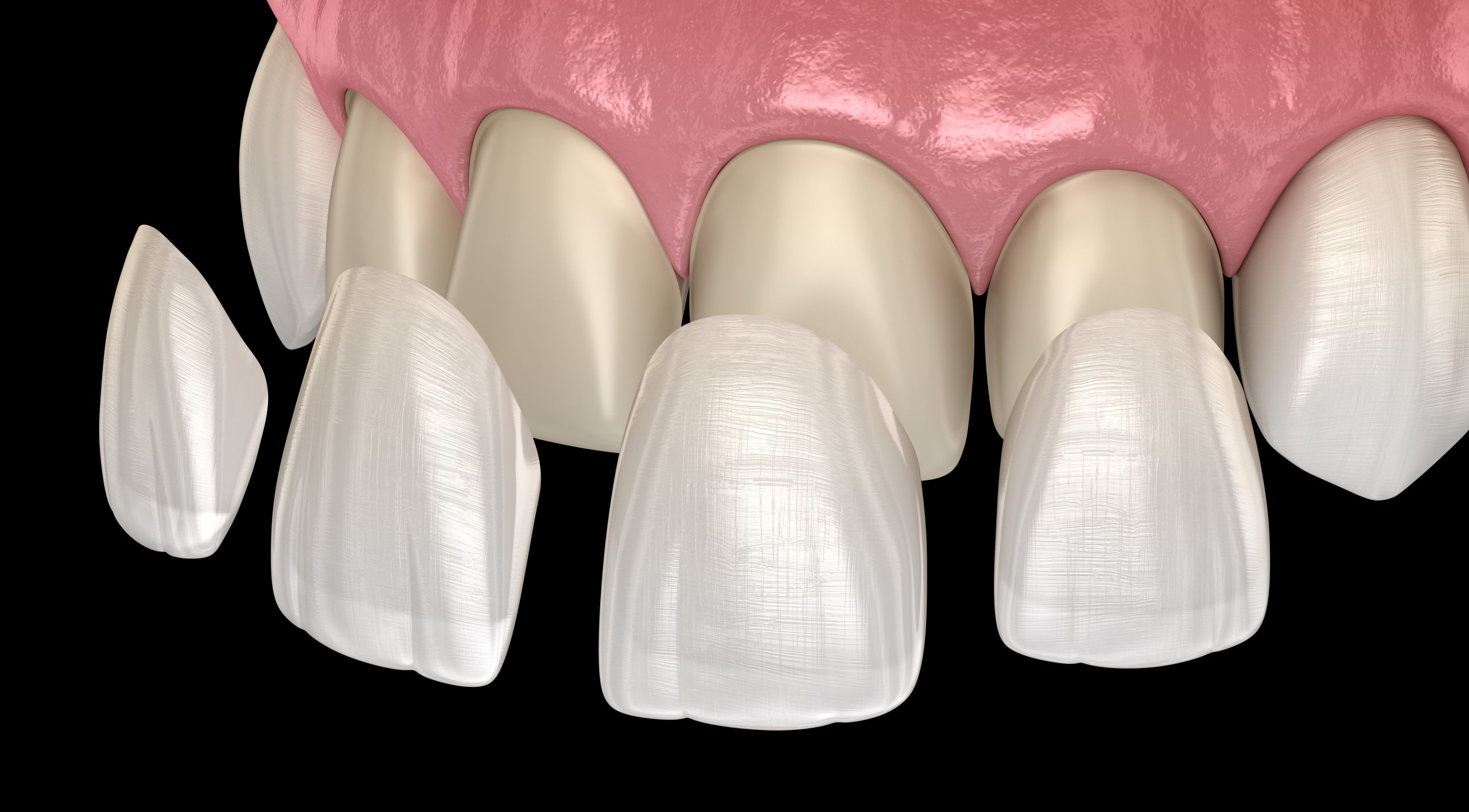
Why the Right Choice Matters
Veneers are one of the most transformative cosmetic dental treatments available — thin porcelain shells bonded to the front surface of your teeth that can completely change the appearance of your smile. But unlike a haircut that grows back or a paint color you can repaint over, veneers are a long-term commitment. The shape, size, and color you choose will become part of your face for the next ten to fifteen years or more.
Getting it right is not about chasing a trend or copying a celebrity smile. It is about finding what genuinely suits your face, your skin tone, your personality, and your lifestyle. A well-chosen set of veneers looks completely natural — nobody notices the veneers, they just notice that you have a great smile.
Step 1 — Choosing the Right Shape
Veneer shape refers to the overall outline and contour of each tooth. The goal is to select a shape that complements your facial structure and feels harmonious rather than out of place.
Square veneers Square-shaped teeth have flat, straight edges with minimal rounding at the corners. They project a strong, structured appearance and tend to suit people with wider, more angular facial features. They are a popular choice for men and for patients who want a bold, defined smile.
Oval and rounded veneers Oval shapes have softer edges and a more gentle contour. They tend to look natural and feminine and work well with rounder or softer facial structures. They are among the most universally flattering shapes because they mimic the natural wear pattern of healthy teeth.
Tapered veneers Tapered teeth are slightly narrower at the bottom than at the top, giving the smile a more delicate, refined appearance. This shape works particularly well for patients with narrow faces or fine features.
How your dentist helps An experienced cosmetic dentist will analyze the shape of your face, the width of your lips, your gum line, and your existing tooth structure before making shape recommendations. Many clinics offer digital smile design or wax mock-ups so you can preview different shapes before committing.

Step 2 — Getting the Size Right
Size refers to both the length and the width of the veneers. Even a small difference of one or two millimeters can dramatically change how a smile looks and feels.
Length Longer veneers tend to look youthful — natural teeth shorten with age due to wear, so slightly longer teeth read as younger. However, there is a limit. Veneers that are too long can look artificial, interfere with your bite, or feel uncomfortable when speaking. Your dentist will use the natural resting position of your lips as a guide for ideal tooth length.
Width Width should be proportional to the length. A classic guideline used in cosmetic dentistry is the golden proportion — where each tooth is roughly 60 percent the width of the tooth beside it as you move from center to the sides. This creates a natural visual tapering that looks balanced and harmonious.
Gum line considerations The size of your veneers is directly affected by your gum line. If your gums sit low or unevenly across your teeth, a gum contouring procedure may be recommended before or alongside veneer placement to create a clean, even canvas.
Step 3 — Selecting the Right Color
Color is where many patients feel the most pressure — and where the most common mistakes are made. The goal is not the whitest possible result. The goal is the most natural-looking result that still gives you a visible improvement.
Matching your skin tone Cooler, bluish-white shades tend to complement fair or cool-toned skin. Warmer, ivory or off-white shades generally suit medium to darker skin tones better. Your dentist will hold shade samples against your face and lips — not just your teeth — to find what looks most natural in the context of your overall appearance.
Eye white comparison A reliable clinical guideline is that your veneers should not appear whiter than the whites of your eyes. When veneers are brighter than the sclera, the smile begins to look artificial even in casual conversation. Staying at or slightly below eye-white brightness produces the most believable result.
Avoiding the “bathroom tile” effect A common mistake in veneer selection is choosing a shade that is uniformly, perfectly white across all teeth. Natural teeth have subtle color variation — slightly more yellow near the gumline, slightly more translucent at the tips. High-quality porcelain veneers replicate this gradient, and a skilled ceramist will build it in. When reviewing shade options, look for depth and translucency rather than flat, opaque brightness.
If you plan to whiten your natural teeth If any of your natural back teeth will be visible when you smile or speak, whiten them before your veneers are fabricated — not after. Veneers are color-matched to your teeth at the time they are made and cannot be whitened once they are bonded.
The Importance of a Trial Smile
Before any tooth preparation takes place, ask your dentist about a trial smile — also called a mock-up or diagnostic wax-up. This is a temporary, non-invasive preview of your proposed veneer result, either created digitally using smile design software or physically using composite resin placed over your teeth in the dental chair.
A trial smile lets you see and feel your new proportions before committing. It is the single most effective way to avoid surprises and ensure that you and your dentist are aligned on the final result. Many patients make small adjustments to shape or length after seeing the mock-up — which is exactly the point.
Questions to Ask Your Dentist Before Choosing
Going into your consultation prepared makes a significant difference in the quality of the outcome. Consider asking:
-
- Can I see before and after photos of similar cases you have completed?
-
- Will I get a trial smile or digital preview before preparation begins?
-
- How many veneers do I actually need to achieve the result I want?
-
- What porcelain brand or ceramic lab do you use, and why?
-
- How will the veneers look under different lighting conditions — natural light, office lighting, photography?
Frequently Asked Questions
1. How many veneers do most people get?
It depends on how many teeth show when you smile. Most patients veneer between six and ten upper front teeth — the ones visible in a full smile. Some extend to the lower teeth as well. Your dentist will help you determine the minimum number needed to achieve a balanced, natural result without unnecessary treatment.
2. Can I choose any shade I want, or will my dentist advise me?
Both. You have the final say, but an experienced cosmetic dentist will give you honest guidance if a shade you are drawn to is likely to look unnatural against your complexion or eye color. Think of it as a collaboration — your preferences matter, and so does their clinical experience.
3. What if I don’t like my veneers after they are placed?
This is why a trial smile is so important — it dramatically reduces the chance of dissatisfaction. Once veneers are bonded, adjustments are possible but limited. Shape can be refined to a degree by polishing. Color cannot be changed without replacing the veneers. Choosing a dentist who offers a thorough consultation and preview process is the best protection against this outcome.
4. Do veneers look different in photos than in person?
They can. Photography — especially with flash — tends to amplify whiteness and flatten the natural depth of porcelain. A shade that looks beautifully natural in person can appear very bright in flash photography. If how your smile photographs is important to you, mention this to your dentist and ceramist during the shade selection process.
“Choosing your veneers is one of the most personal decisions in cosmetic dentistry — our team takes the time to understand your goals, your features, and your lifestyle before a single tooth is touched, because a great smile should look like it was always yours.”