
Real numbers for the Twin Cities, what insurance and Medical Assistance cover, and why the emergency room is the most expensive door to walk through.
Almost nobody rings a dentist in pain and asks the price first. They ask how soon they can be seen, and then worry about the bill on the drive over. That is an understandable order to put things in. But not knowing is its own kind of stress, and for some people it is the reason they wait a week longer than they should.
So here are the actual numbers for this part of Minnesota, where they come from, and what moves them up or down.
There are two costs, not one
An emergency dental appointment is almost always billed in two parts. First there is the visit itself, which covers the examination and any X-rays needed to see what is happening below the gum line. Then there is the treatment, which depends entirely on what that exam finds.
The visit is the cheaper and far more predictable half. The American Dental Association puts a typical dental office visit at $90 to $200. It is the second half where the range opens up, and it is the second half nobody can quote you honestly over the phone without looking first.
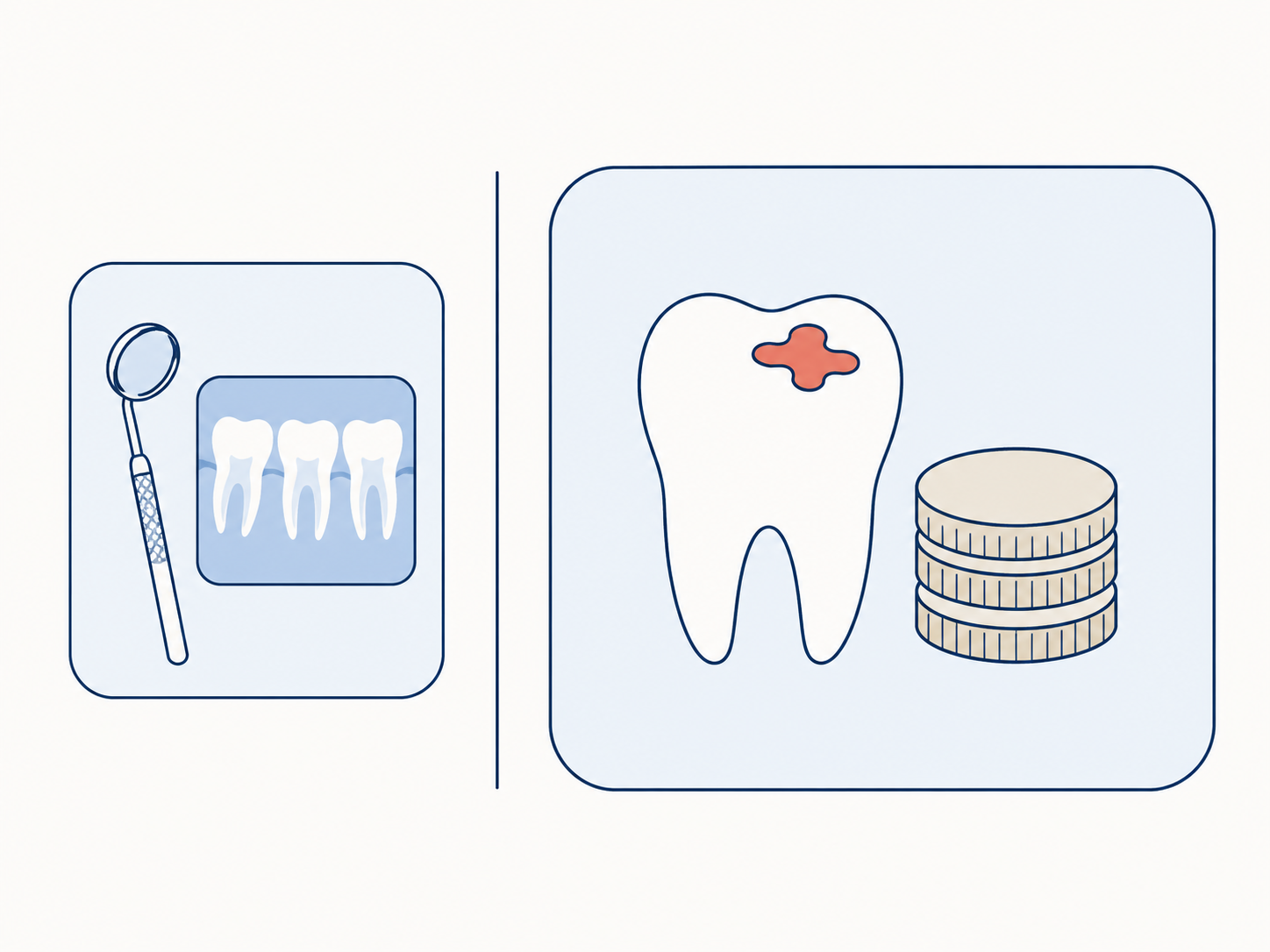
What the common repairs run in the Twin Cities
The figures below are drawn from American Dental Association Health Policy Institute research and FAIR Health consumer data for the Minneapolis metro, which sits around five per cent above the national average. They are estimates rather than quotes. What you are actually charged depends on the tooth, how complicated it turns out to be, and what your plan covers.
| Treatment | Typical Twin Cities range |
|---|---|
| Office visit, exam and X-rays | $90 to $200 |
| Simple extraction | $160 to $370 |
| Surgical extraction | $315 to $685 |
| Root canal, front tooth | $630 to $1,155 |
| Root canal, premolar | $735 to $1,470 |
| Root canal, molar | $1,050 to $1,890 |
| Hospital emergency room visit | $400 to $1,500, averaging $749 |
One thing that catches people out: if a root canal is done on a back tooth, it almost always needs a crown afterwards to stop the tooth splitting, and the crown is billed separately from the root canal. Ask about it up front rather than discovering it at the end.
The emergency room is the most expensive door, and it will not fix your tooth
Around two million people a year in the United States go to a hospital emergency department for dental pain. It is easy to see why. The ER is open, it does not ask whether you are a registered patient, and when you are in real pain at two in the morning it feels like the only option.
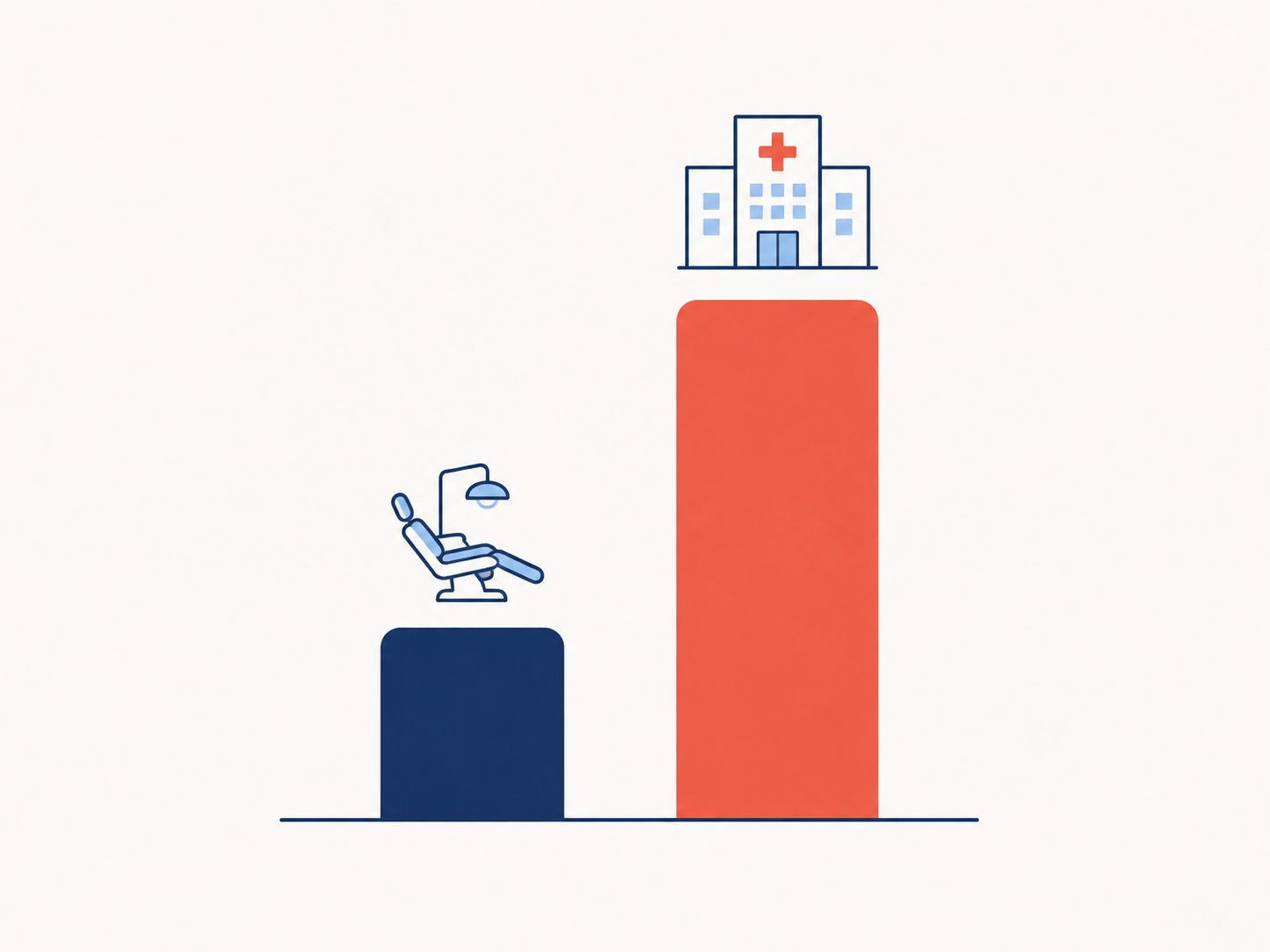
It is also, by a distance, the most expensive way to handle a toothache. The American Dental Association puts the average emergency department visit for dental care at $749 when the patient is not admitted, within a range of roughly $400 to $1,500. That is about three times what a dental visit costs.
The harder truth is what you get for it. Hospital emergency departments are not set up to do dentistry. There is usually no dentist on duty, no dental chair and no drill. National data shows that around 95 per cent of dental-related emergency department patients are treated and sent home the same day, and what they are typically sent home with is antibiotics and painkillers. The infection is calmed down. The tooth that caused it is exactly as it was when they walked in.
Which means that for most people the ER is not an alternative to seeing a dentist. It is an expensive delay before seeing one, and you pay twice.
There is one genuine exception, and it matters. If you have a fever together with facial swelling, or any difficulty breathing or swallowing, go to the emergency room immediately. Those signs can mean an infection has spread beyond the tooth, and that is exactly what a hospital is for.
What dental insurance usually does
Most dental plans treat an emergency examination as diagnostic and cover a good share of it. Treatment is where plans differ sharply. Extractions and root canals normally sit in the basic or major categories, where you carry a percentage of the cost yourself, and most plans cap what they will pay in a year.
That cap is worth checking before you book anything substantial. A root canal followed by a crown can absorb a large part of a typical annual maximum in a single afternoon, and if you have already used some of it earlier in the year, the balance falls to you.
If you are on Medical Assistance or MinnesotaCare
Minnesota Health Care Programs do cover emergency dental care for adults, which surprises people who assume dental coverage stops at childhood. Emergency treatment of dental pain is covered, limited to once a day. Exams are covered. Extractions are covered, though authorisation is always required first. Root canals are covered once per tooth in a lifetime, on front teeth, premolars and molars alike.
Rather than a single annual dollar cap, the programme works through frequency limits on each type of treatment. The practical catch is not the coverage, it is finding a practice that is enrolled. Not every dental office in the north metro takes Minnesota Health Care Programs, so ask that question at the start of the call rather than the end of it.
Why waiting is the expensive choice
A small cavity filled early is the cheapest item on this page by a wide margin. Left alone, decay reaches the nerve and the filling becomes a root canal and a crown. Left longer than that, the tooth comes out. And once a tooth is out, replacing it with an implant or a bridge is the most expensive outcome of the lot.
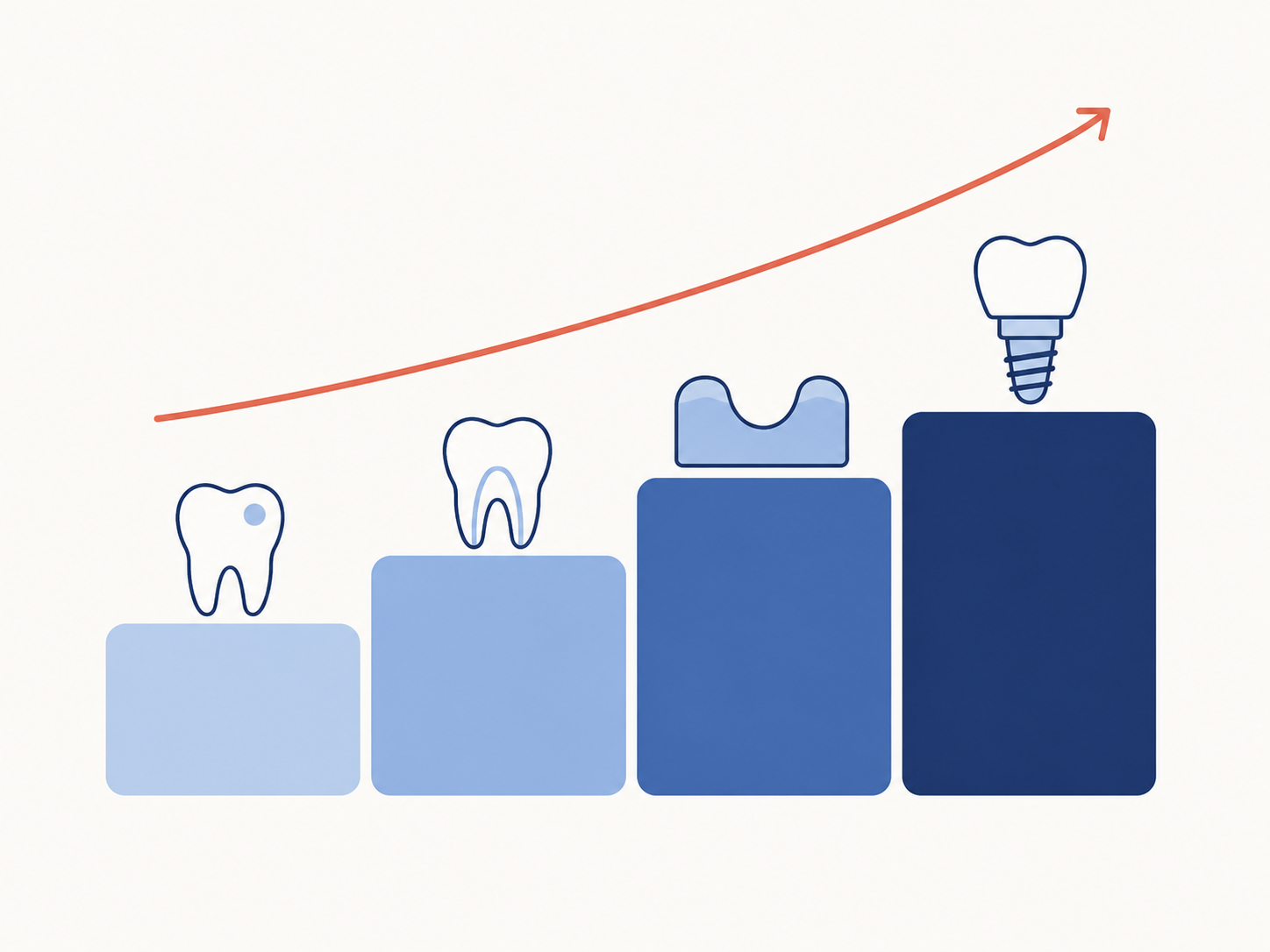
Every rung of that ladder costs more than the one below it. The only part of it you control is where you step off.
What to ask when you ring
You can get most of the uncertainty out of the way in a two minute phone call. Ask what the emergency examination and X-rays cost, because that part can be quoted before anyone looks in your mouth. Ask whether the practice is in network with your plan, or enrolled with your programme. Ask what the likely treatment options are for what you are describing, and the rough range for each. And if money is the thing stopping you, say so on the phone, because it is a far easier conversation to have before treatment than after it.
Pro Dental is a general and family dental practice in Blaine, Minnesota. If you are in pain and want to know what you are walking into before you commit, call 763-231-2050 and ask. The cost of the visit itself is something we can tell you before you book.
Cost figures: American Dental Association Health Policy Institute and FAIR Health consumer data for the Minneapolis metro area. Emergency department figures: American Dental Association, Action for Dental Health, and the Healthcare Cost and Utilization Project. Coverage detail: Minnesota Department of Human Services, Minnesota Health Care Programs provider manual. Ranges are estimates, not quotes, and were accurate at the time of writing.