
What Are Dental Sealants?
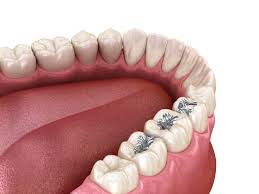
Dental sealants are thin, plastic coatings applied to the chewing surfaces of the back teeth — the molars and premolars. These surfaces are covered in deep grooves and pits that are naturally difficult to clean thoroughly with a toothbrush. Food particles and bacteria collect in these grooves, and over time, cavities form — even in patients who brush and floss consistently.
A sealant fills in these grooves and creates a smooth, sealed surface that is far easier to keep clean. Think of it as a protective shield placed directly over the most cavity-prone areas of the tooth. The procedure is quick, completely painless, and requires no drilling or removal of tooth structure.
How Effective Are Sealants, Really?
The short answer is: very. Research consistently shows that sealants are one of the most effective preventive tools available in dentistry when applied correctly and maintained properly.
Studies from the Centers for Disease Control and Prevention indicate that sealants can prevent up to 80 percent of cavities in the back teeth during the first two years after application, and continue to protect against roughly 50 percent of cavities for up to four years. Given that the molars are responsible for the vast majority of childhood cavities, this is a significant level of protection.
For children and teenagers, the benefit is especially pronounced. The first permanent molars typically erupt around age six, and the second molars around age twelve — both of which are prime candidates for sealants as soon as they fully emerge. Sealing these teeth early, before any decay has a chance to begin, is one of the most cost-effective preventive investments a parent can make in their child’s dental health.
That said, sealants are not exclusively for children. Adults with deep grooves in their molars and no existing decay or fillings in those teeth can also benefit from sealant application.
How Are Sealants Applied?
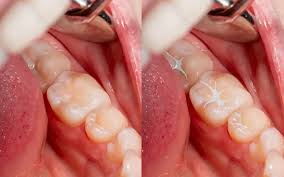
The application process is straightforward and takes only a few minutes per tooth. Here is what to expect:
Cleaning the tooth surface The tooth is thoroughly cleaned and dried before any sealant is applied. Any residual debris or plaque in the grooves must be removed to ensure the sealant bonds properly.
Preparing the surface A mild acidic solution is applied briefly to the chewing surface to roughen it slightly at a microscopic level. This creates a better bonding surface for the sealant material. The tooth is then rinsed and dried again.
Applying the sealant The liquid sealant material is painted directly onto the grooves and pits of the tooth. It flows into the natural contours of the surface and fills them in completely.
Curing the sealant A special curing light is used to harden the sealant within a matter of seconds. Once hardened, it bonds firmly to the tooth and is immediately ready for normal chewing function.
The entire process for one tooth takes roughly five to ten minutes. There is no anesthesia, no discomfort, and no recovery time.
How Long Do Sealants Last?
With normal use, dental sealants can last anywhere from five to ten years. They are durable enough to withstand the daily forces of chewing, but they do wear down over time and should be checked at every routine dental visit. If a sealant chips or partially wears away, it can be reapplied easily. A sealant that remains fully intact continues to provide complete protection for the sealed surface.
It is also worth noting that sealants only protect the surfaces they cover — the chewing surfaces of the back teeth. They do not protect the sides of teeth or the spaces between them, which is why brushing and flossing remain essential alongside sealant use.
Who Benefits Most From Sealants?
While sealants offer value for a wide range of patients, certain groups benefit most:
-
- Children and teenagers whose permanent molars have recently erupted and have not yet developed any decay
-
- Adults with naturally deep grooves in their molars who have no existing fillings in those specific teeth
-
- Patients with a history of frequent cavities, where extra preventive measures are especially worthwhile
-
- Patients with limited dexterity or difficulty maintaining a thorough brushing routine in the back teeth
If you are unsure whether sealants are appropriate for yourself or your child, your dentist can evaluate the tooth surface at your next checkup and give a straightforward recommendation.
Sealants vs. Fluoride — Do You Need Both?
Yes. Sealants and fluoride work in different ways and complement each other rather than replacing one another. Fluoride strengthens the overall enamel structure of all teeth, making them more resistant to acid attack across every surface. Sealants provide a physical barrier on the specific high-risk grooves of the back teeth where fluoride alone cannot fully reach.
Using both together gives teeth a more comprehensive level of protection than either approach provides on its own. Regular fluoride treatments at your dental visits and fluoride toothpaste at home, combined with sealants on the back teeth, represent the current gold standard in cavity prevention for children and high-risk adults.
Are Sealants Safe?
Yes. Dental sealants have been used safely and extensively in dentistry for over fifty years. The materials used are approved and rigorously tested. Some older sealant formulas contained trace amounts of BPA, a concern that has been widely studied — current research indicates that the level of exposure from dental sealants is negligible and well below any threshold of concern. If this is something you have questions about, your dental team can walk you through the specific materials used at your practice.
Frequently Asked Questions
1. At what age should a child get dental sealants?
The ideal time is as soon as the permanent molars fully erupt — typically around age six for the first molars and age twelve for the second molars. Applying sealants promptly after eruption, before any decay has a chance to develop, gives them the greatest protective benefit. Baby teeth can also be sealed in children who are at high risk for cavities, though this is less common.
2. Can sealants be placed over a cavity?
No. Sealants are a preventive measure, not a treatment for existing decay. If a cavity is already present, it must be treated first. However, if a tooth has very early-stage decay that has not yet fully progressed, your dentist may recommend sealing it to halt further progression — this is a clinical judgment call made on a case-by-case basis.
3. Will my child be able to eat normally after sealants are placed?
Yes, immediately. There is no waiting period and no dietary restrictions after sealant application. The tooth is ready for normal chewing function as soon as the sealant has been cured, which happens in the dental chair before your child leaves.
4. Does insurance cover dental sealants?
Many dental insurance plans cover sealants for children, typically up to age eighteen, as part of their preventive benefits. Coverage for adults varies by plan. It is worth checking with your insurance provider before your appointment, and your dental team can help you understand your benefits if needed.
“Sealants are one of the simplest, most effective investments in long-term dental health — a few minutes in the chair today can mean years of cavity-free checkups for your child. Ask our team at your next visit whether sealants are right for your family.”