
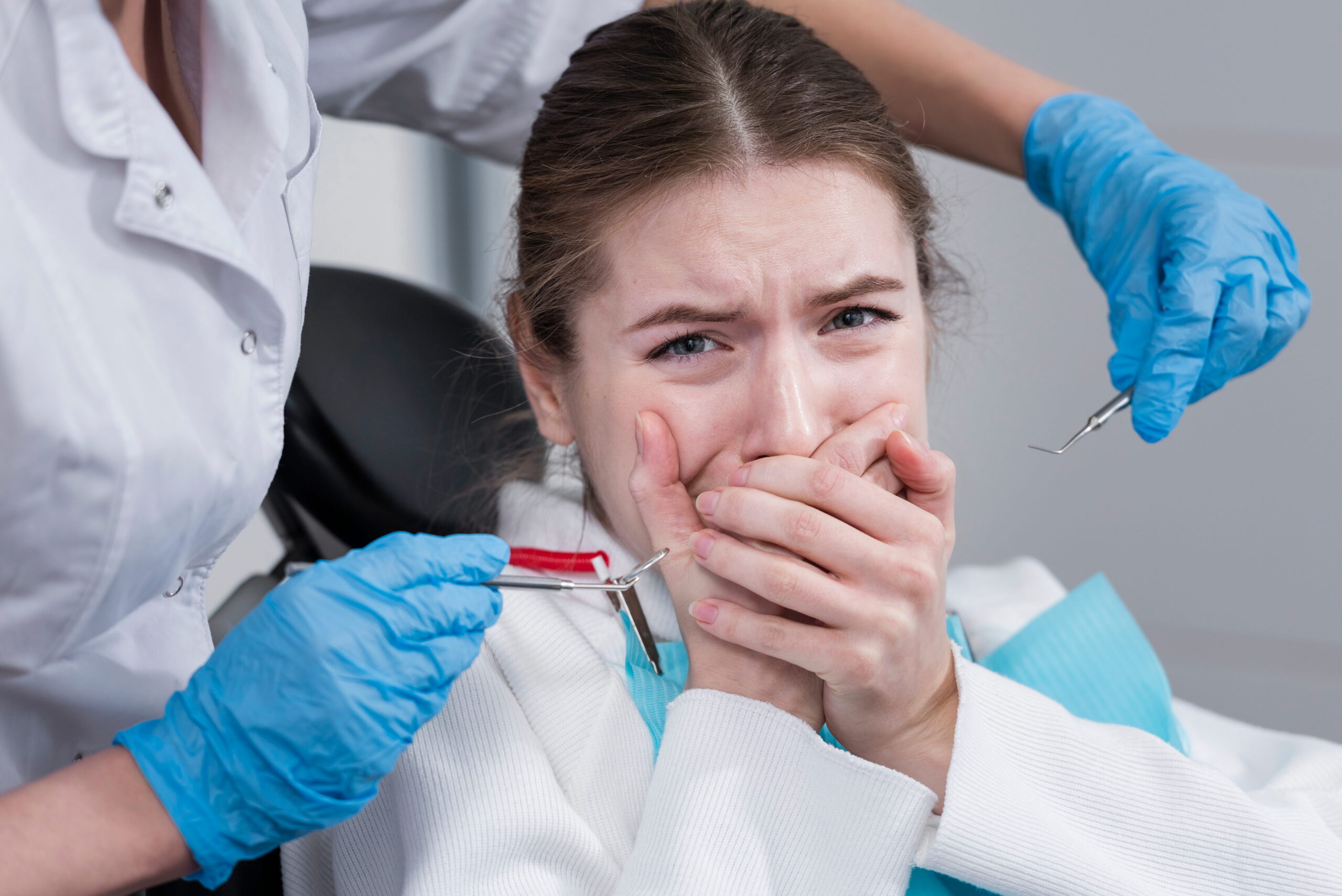
If the thought of sitting in a dentist’s chair makes your heart race, your palms sweat, or your mind race through every worst-case scenario, you are not alone.
In fact, according to a census-matched study published in the September 2025 issue of the Journal of the American Dental Association, 72.6% of U.S. adults reported some level of dental fear, with 45.8% describing it as moderate and 26.8% as severe.
Dental anxiety is one of the most common concerns we encounter at Pro Dental, and it is something our team takes seriously every single day.
The good news is that dental fear, no matter how long you’ve carried it, does not have to stand between you and a healthy, comfortable smile. This guide is for every patient who has ever cancelled an appointment out of anxiety, put off a visit for months (or years), or simply felt that going to the dentist was something to be dreaded rather than embraced.
What are the Common Types of Dental Phobia?
- Fear of pain: The most prevalent type, often rooted in a past negative experience or stories heard from others.
- Fear of needles: A significant number of patients experience anxiety specifically around injections and local anaesthesia.
- Fear of loss of control: The feeling of being reclined in a chair, unable to see what is happening, can be deeply unsettling for some patients.
- Fear of embarrassment: Many patients feel ashamed about the condition of their teeth, particularly after years of avoiding care.
- Fear of sounds and smells: The sounds of dental equipment or the clinical smell of a dental office can act as powerful anxiety triggers.
What Causes Dental Anxiety?
Understanding the root of your dental anxiety is an important first step toward overcoming it. For most patients, dental fear does not appear out of nowhere, it develops over time through specific experiences and influences.
- A previous painful or traumatic dental experience – particularly during childhood, is one of the most common causes of lasting dental anxiety.
- Negative stories from others – friends, family members, or online accounts that describe painful or frightening dental experiences can create fear even before a patient has had a bad experience of their own.
- General anxiety disorders- patients who experience anxiety in other areas of their life are significantly more likely to develop dental phobia.
- Feeling of helplessness – the nature of dental treatment, where a patient must remain still and open while someone works in their mouth, can create a genuine sense of vulnerability.
5 Tips to Overcome Dental Anxiety
1. Communicate Openly With Your Dentist
The single most effective step you can take is to tell your dental team about your anxiety before your appointment begins. A good dentist will never dismiss your concerns, they will adapt their approach, explain every step in advance, and work at a pace that feels manageable for you.
At Pro Dental, we encourage every nervous patient to speak up. Knowing your anxiety allows us to provide a genuinely tailored experience, not a one-size-fits-all appointment.
2. Establish a Signal to Pause
One of the most powerful tools for anxious patients is a simple agreed signal, such as raising your hand, that tells your dentist to stop immediately. Knowing that you have control over when the treatment pauses can significantly reduce the feeling of helplessness that often drives dental fear.
This small agreement between patient and dentist can make an enormous difference to the overall experience.
3. Use Distraction Techniques
Many patients find that focusing their attention elsewhere during treatment helps significantly. Consider:
- Listening to music, a podcast, or an audiobook through earphones
- Focusing on slow, deliberate breathing throughout the appointment
- Squeezing a stress ball or keeping your hands occupied
- Visualising a calm, familiar place during the procedure
4. Start With a Simple, Low-Pressure Appointment
If the idea of a full treatment feels overwhelming, begin with a consultation or a routine cleaning. Simply walking into the practice, meeting the team, and becoming familiar with the environment can reduce anxiety significantly for future visits.
Building trust with your dental team gradually is a completely valid and effective approach, and one we actively encourage at Pro Dental.
5. Consider Sedation Dentistry
For patients with significant dental phobia, sedation dentistry offers a clinically proven solution that allows treatment to be completed in a deeply relaxed, or even sleep-like state. It is safe, effective, and available right here at Pro Dental.
Sedation is an option worth discussing with our team if anxiety has previously prevented you from receiving the dental care you need.
How Pro Dental Makes Every Visit Comfortable
At Pro Dental in Blaine, MN, we understand that for many patients, simply walking through our door is an act of courage. Our entire team is trained to create a calm, welcoming, and judgment-free environment from the very first moment you arrive.
- No judgment: Whether it’s been two years or ten since your last visit, we start exactly where you are.
- Full transparency: We explain every step of every procedure before we begin, no surprises, no unexplained sensations.
- Advanced technology for greater comfort: Our electric handpieces, digital imaging, and 3Shape TRIOS scanner eliminate many of the most anxiety-inducing aspects of traditional dental treatment.
- Sedation options available: For patients who need additional support, our sedation dentistry service ensures a genuinely comfortable experience from start to finish.
When to Consider Sedation Dentistry
Sedation dentistry may be the right option for you if:
- Your dental anxiety has caused you to avoid care for an extended period of time
- You experience panic attacks or severe physical symptoms at the thought of dental treatment
- You have a strong gag reflex that makes treatment difficult
- You require extensive treatment and would prefer to have it completed in fewer, more comfortable visits
Our team will discuss your sedation options during your consultation and recommend the most appropriate approach for your specific needs and medical history.
Frequently Asked Questions
1. Is dental anxiety common?
Extremely. According to a 2025 study in the Journal of the American Dental Association, 72.6% of U.S. adults report some level of dental fear. You are far from alone, and the care you need is closer than you think.
2. What if I haven’t been to the dentist in years because of anxiety?
This is one of the most common situations we encounter, and it is never too late to start again. We will assess your current oral health, explain everything we find in plain language, and create a treatment plan that feels manageable, at a pace that works for you.
3. Is sedation dentistry safe?
Yes. Sedation dentistry is a well-established, clinically proven approach that is used safely for millions of patients every year. Our team will conduct a thorough review of your health history before recommending any sedation option, ensuring the safest and most comfortable experience possible.
4. How can I prepare for a dental appointment if I have anxiety?
Call us ahead of your appointment and let us know about your anxiety, this alone makes a significant difference. Arrive a few minutes early to settle in, bring headphones if music helps you relax, and remember that you are always in control of the pace of your treatment at Pro Dental.
Ready to Take the First Step?
You have already taken one by reading this. The next step is simply reaching out, and we promise to make everything after that as easy and comfortable as possible.