
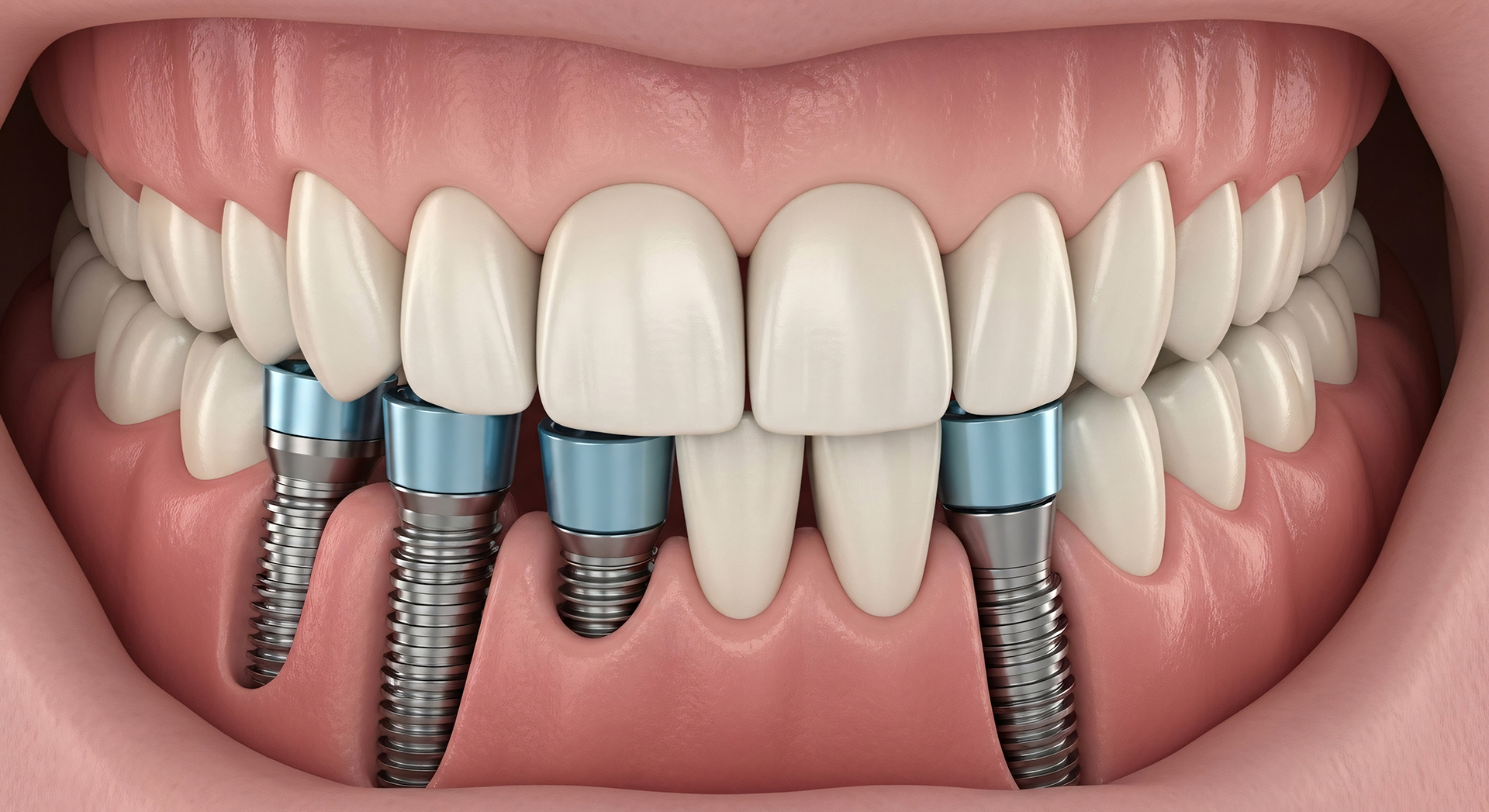
What are All-on-4 dental implants?
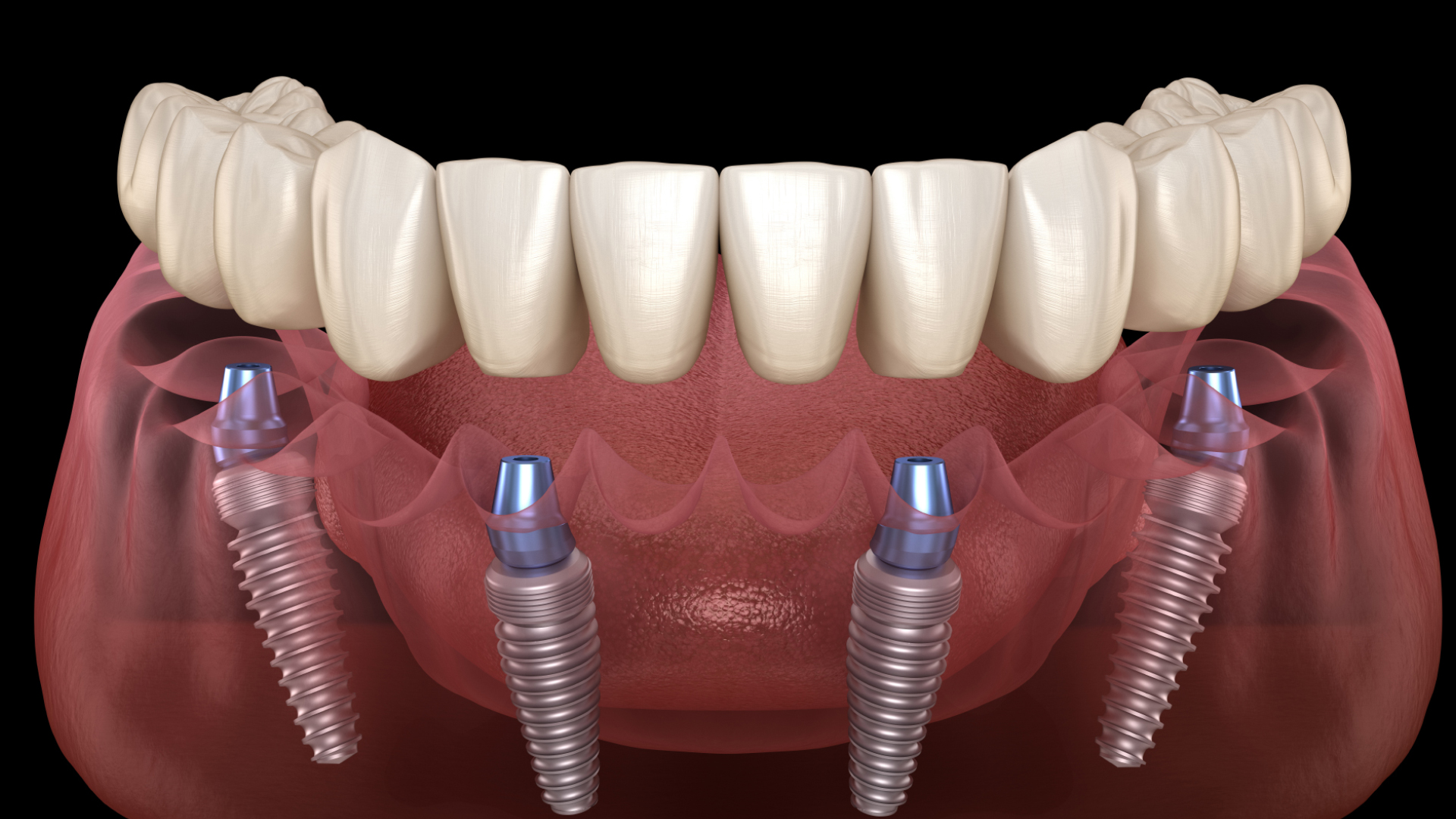
All-on-4 implants replace a full arch of missing teeth using just four titanium posts anchored into the jawbone. Unlike removable dentures, this bridge is fixed in place — meaning it functions like natural teeth. You can eat, speak, and smile normally, with no adhesives or nightly removal required.
Because the bridge is permanently attached, cleaning it requires a slightly different approach than brushing regular teeth. Once you build the habit, it takes no more than a few extra minutes each day.
Why cleaning matters more than you think
The prosthetic teeth themselves are stain-resistant and won’t decay. But the gum tissue and jawbone around the implants are very much alive — and vulnerable.
When plaque and food particles build up along the gumline or underneath the bridge, it creates an environment for bacteria to thrive. Over time, this can lead to:
Peri-implantitis — an infection that weakens the jawbone and can cause implant failure
Gum recession — inflammation and redness at the bridge-to-gum junction
Systemic issues — bacteria entering the bloodstream from an unclean oral environment
Your daily cleaning routine
Step 1 — Brushing
Brush twice a day using a soft-bristled toothbrush. Focus especially on the junction where the bridge meets your gumline — this is where food debris hides most. Use a non-abrasive toothpaste to avoid scratching the prosthetic surface over time.
Step 2 — Cleaning underneath the bridge
Because regular floss won’t pass through a fixed bridge the way it does with natural teeth, you need the right tools:
- Water flosser — most effective for flushing debris from underneath the bridge
- Interproximal brushes — small proxy brushes for tight spaces between implants
- Super floss — a stiffened-end floss that threads under the bridge for manual cleaning
Aim to clean underneath the bridge at least once a day, ideally before bed.
Professional maintenance
Home care handles the day-to-day, but professional cleanings every six months are what protect the long-term health of your implants. Your dental team uses specialised instruments to clean around the implant sites, checks the bridge fit, and monitors bone density with X-rays. These appointments are where small problems get caught before they become expensive ones.
Frequently asked questions
Can I use regular mouthwash with my implants?
Yes, but choose an alcohol-free formula. Alcohol-based rinses dry out the soft tissue around the implant sites, irritating over time. Alcohol-free antiseptic rinses work equally well without that downside.
How often should I clean under the bridge?
At least once a day, preferably at night before bed. Leaving food particles and bacteria trapped underneath overnight is one of the fastest ways to develop gum inflammation around the implant sites.
Will my implants stain like natural teeth?
The materials used are far more stain-resistant than natural enamel. That said, heavy coffee, tea, or tobacco use can cause surface buildup over time. Regular professional polishing keeps the bridge looking its best.
What happens if I don’t clean them properly?
The most common consequence is peri-implantitis — gum inflammation that, if left untreated, can progress to bone loss around the implant posts. The condition is treatable, but prevention is significantly easier than treatment.
“Our dedicated team is here to support your journey to a healthier smile — schedule your visit today and experience a new level of care and comfort.”